
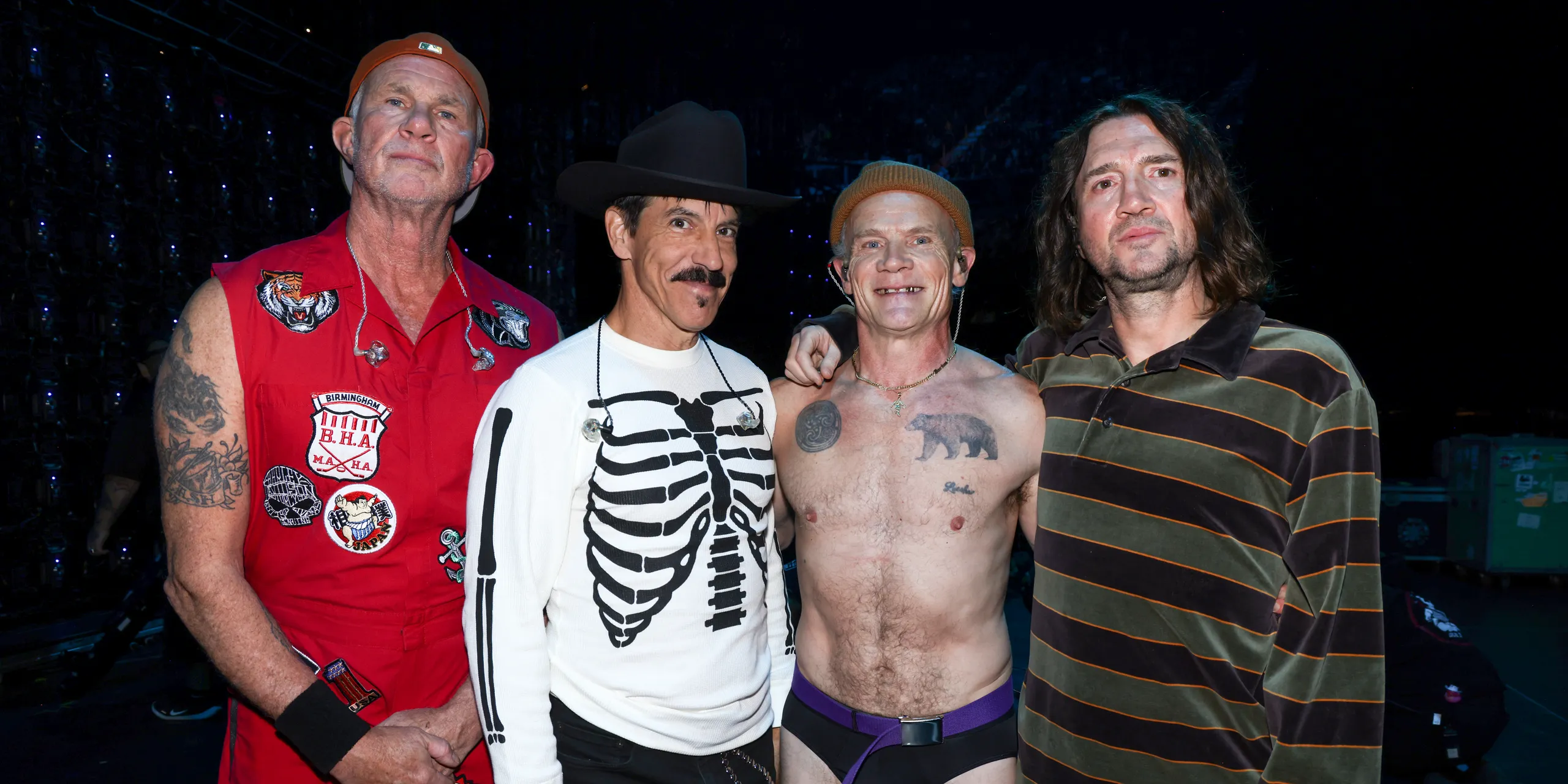
13 Albums.
Gone.
The Red Hot Chili Peppers have sold their recorded music catalog to Warner Music Group for more than $300 million. Here’s what actually happened — and what it means for every artist who has ever signed anything.
On May 8, 2026, the Red Hot Chili Peppers sold the rights to their recorded music catalog — 13 studio albums, decades of hits, hundreds of millions of streams annually — to Warner Music Group for more than $300 million. The deal was executed through WMG’s joint venture with Bain Capital, a $1.2 billion acquisition vehicle launched in July 2025 specifically to buy exactly this kind of music asset. The Peppers’ catalog represents nearly half of the $650 million the joint venture has deployed since launch.
The Red Hot Chili Peppers have been with Warner Records since 1991’s Blood Sugar Sex Magik — every one of their albums since has been released through the label. So in one sense this deal is a homecoming: Warner acquiring what it always had a hand in building. But the mechanics of the transaction tell a different story about what the music industry has become.
This is not a label signing an artist. This is private equity acquiring a revenue-generating asset. Bain Capital’s involvement is the signal. The $1.2 billion joint venture exists for one purpose: to identify catalogs that generate predictable, durable income from streaming, radio, licensing, and sync — and to acquire them before someone else does. The Chili Peppers’ catalog, which Billboard estimates generates approximately $26 million in annual revenue, is exactly that kind of asset.
This deal did not happen in isolation. It was reported in February 2025 that RHCP were shopping their recorded rights, with sources indicating they were seeking up to $350 million. WMG was identified as the most likely buyer early on — not surprising given the band’s long relationship with the label. The deal was finally executed on May 8, 2026, the same day WMG disclosed in its earnings report that the joint venture had deployed $650 million in catalog acquisitions.
The Chili Peppers deal is not unusual. It is the latest in a pattern that has been reshaping the music industry’s financial architecture for the better part of five years. Every major label has now partnered with outside capital to acquire high-profile catalogs at scale.
Universal Music Group holds a minority stake in Chord Music Partners. Sony recently announced a venture with Singapore’s sovereign wealth fund GIC. Warner has Bain Capital. The structure is the same in each case: a major label with deep industry relationships and distribution infrastructure pairs with institutional money that wants stable, long-duration returns. Music catalogs — particularly ones built around songs that have been in radio rotation for twenty or thirty years — deliver exactly that.
The RHCP catalog generates an estimated $26 million in annual revenue from streaming, radio play, licensing, and sync. At $300 million, that is roughly an 11.5x multiple on annual earnings. In the world of institutional investment, that is a reasonable price for an asset that will keep generating income indefinitely — because Under the Bridge is not going anywhere.
The catalog acquisition boom was ignited in earnest when Bruce Springsteen sold his masters and publishing to Sony in 2021 for a reported $500 million-plus. Bob Dylan, Neil Young, Stevie Nicks, David Bowie’s estate — the list of major artists who have monetized their life’s work in a single transaction has grown substantially since. The RHCP deal is the latest entry, but it will not be the last.
What makes the RHCP situation particularly instructive is that this is the second major catalog transaction they have executed. In 2021, the band sold their publishing rights — the underlying compositions, the songs themselves — to Hipgnosis Songs Fund (now Recognition Music Group) for between $140 and $150 million.
This week’s deal covers their master recordings — the specific recorded versions of those songs. Two separate assets. Two separate transactions. Combined value: approximately $450 million or more. The distinction between masters and publishing is one that most music fans have never thought about, and one that most unsigned artists don’t understand until they’ve already signed something that strips one or both away from them.
The Red Hot Chili Peppers built a catalog worth $300 million over thirty-five years. Then they sold it. That is their right — and at that scale, the money is real and the decision is defensible. But the lesson for independent artists is not about the $300 million. It is about the fact that the value was there to sell in the first place.
If RHCP had signed a work-for-hire contract in 1991, Warner would already own those masters. There would be no $300 million transaction. There would be no asset to monetize. The band would have spent thirty-five years building something that belonged to someone else from the moment it was recorded.
Master ownership is not just about control. It is about the accumulation of value over time — value that compounds as songs age, as streaming grows, as licensing opportunities multiply. Every unsigned artist signing a deal today is either building toward that kind of asset or signing it away. The contract determines which one.